MAKO
Website for a build and marketing studio
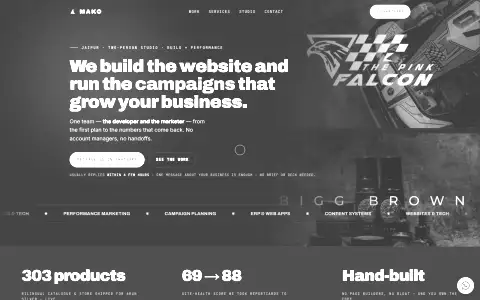
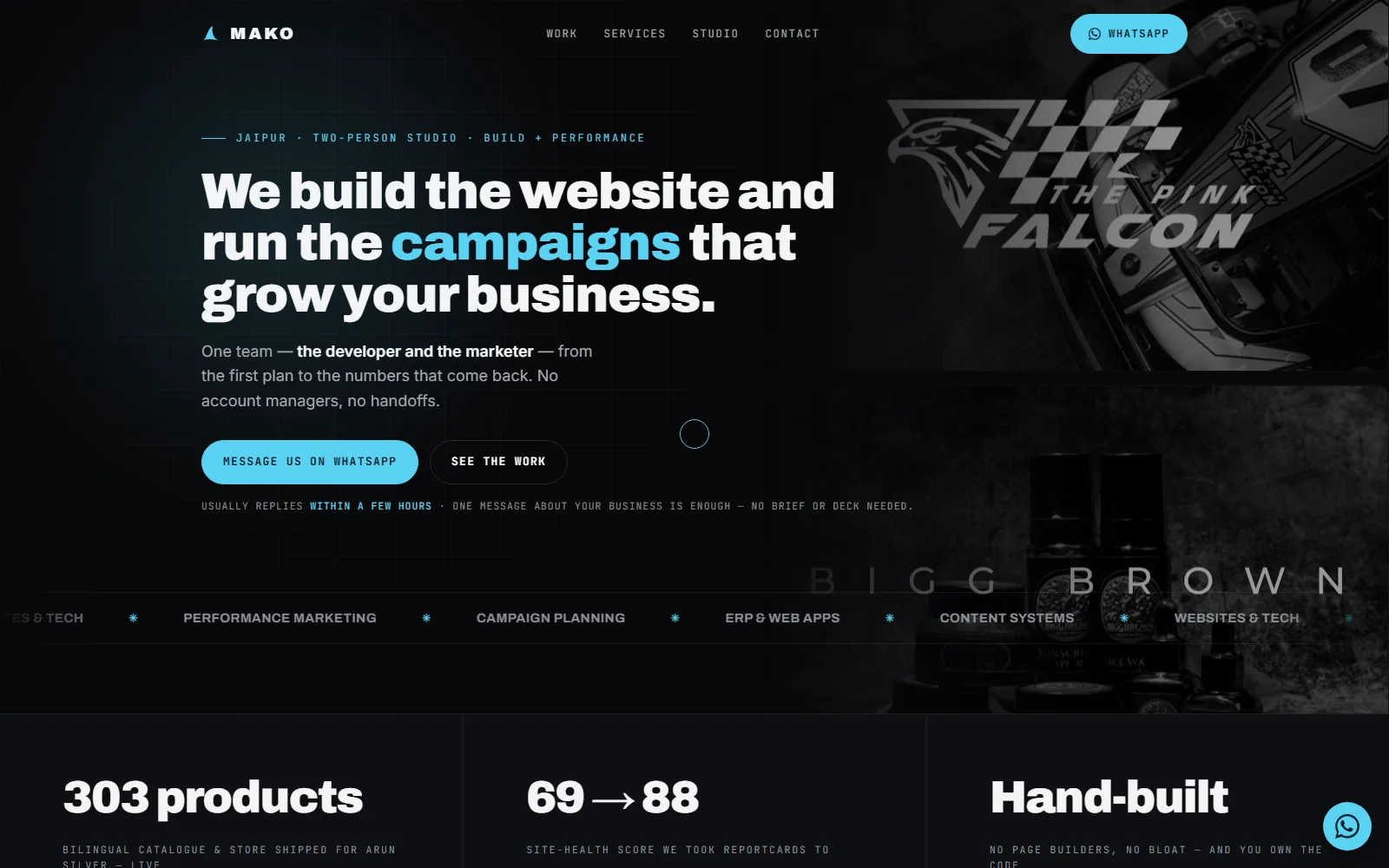
The website for MAKO, the build-and-marketing studio I co-run: fixed prices, real campaign numbers, one-tap WhatsApp.
Walk through it
The problem
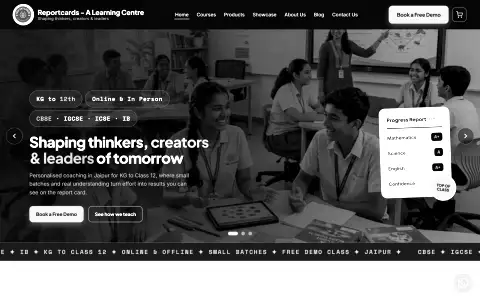
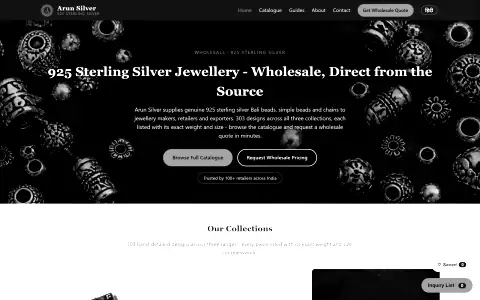
MAKO is the two-person studio I co-run with Manhit Kohli - he runs marketing and campaigns, I build the websites and systems - and until this build it had no site of its own. The work was real (Reportcards' site health climbing 69 to 88, Arun Silver's 439-product bilingual catalogue, a client's Instagram reels pulling millions of views) but none of it lived anywhere a prospect could see it, and the domain itself just showed a placeholder "coming soon" page.
What it does
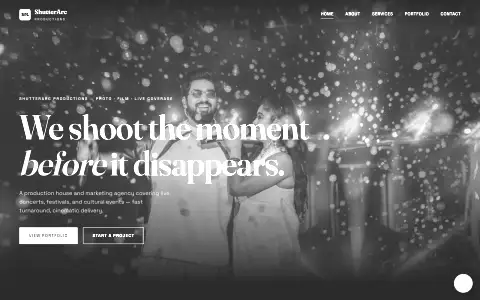
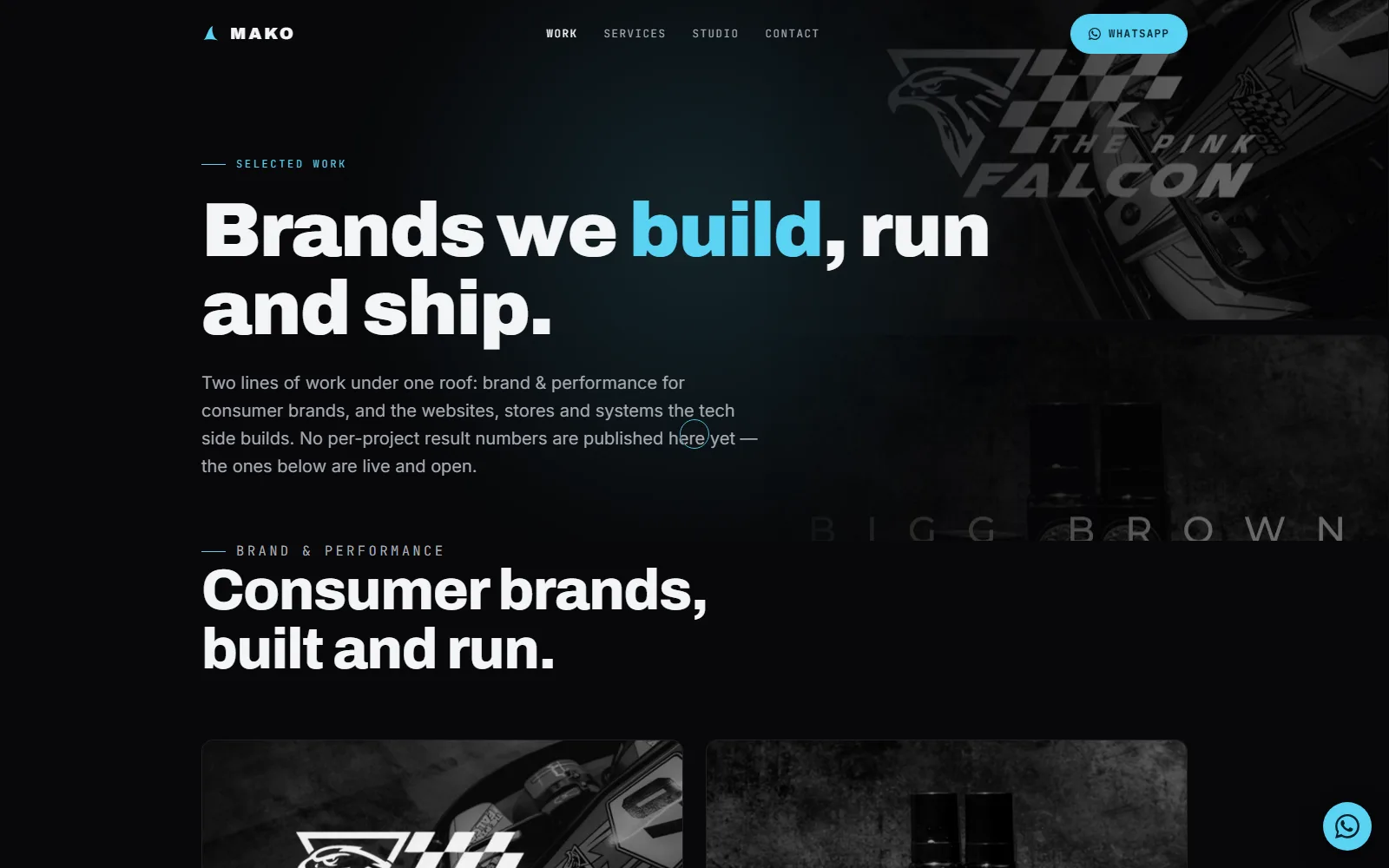
The public site for MAKO, the two-person build-and-performance studio I co-run with Manhit Kohli. Five plain pages - home, work, services, studio, contact - sharing one CSS/JS bundle, deployed to Hostinger with no framework and no build step, matching the zero-marginal-cost approach the studio sells to clients.
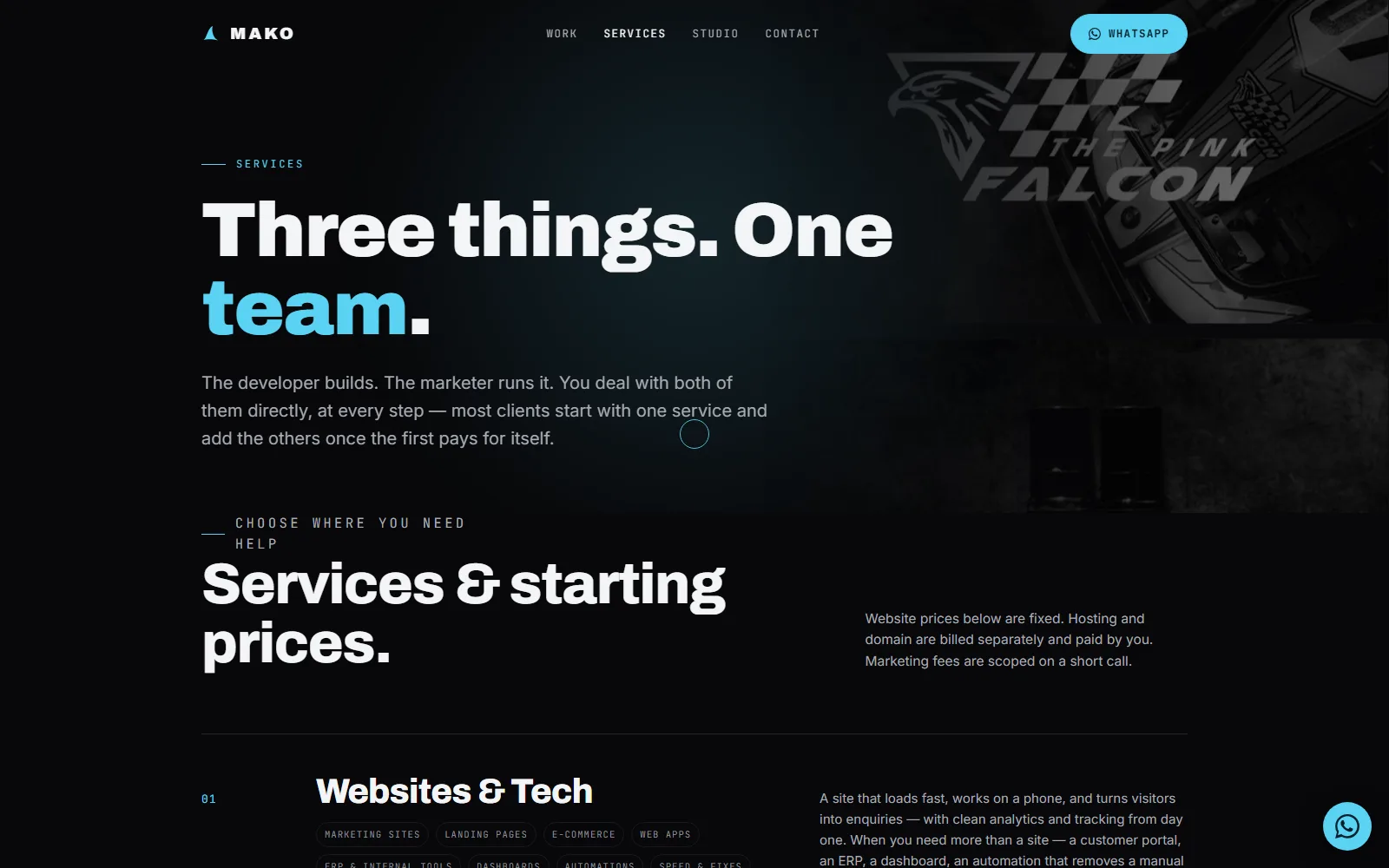
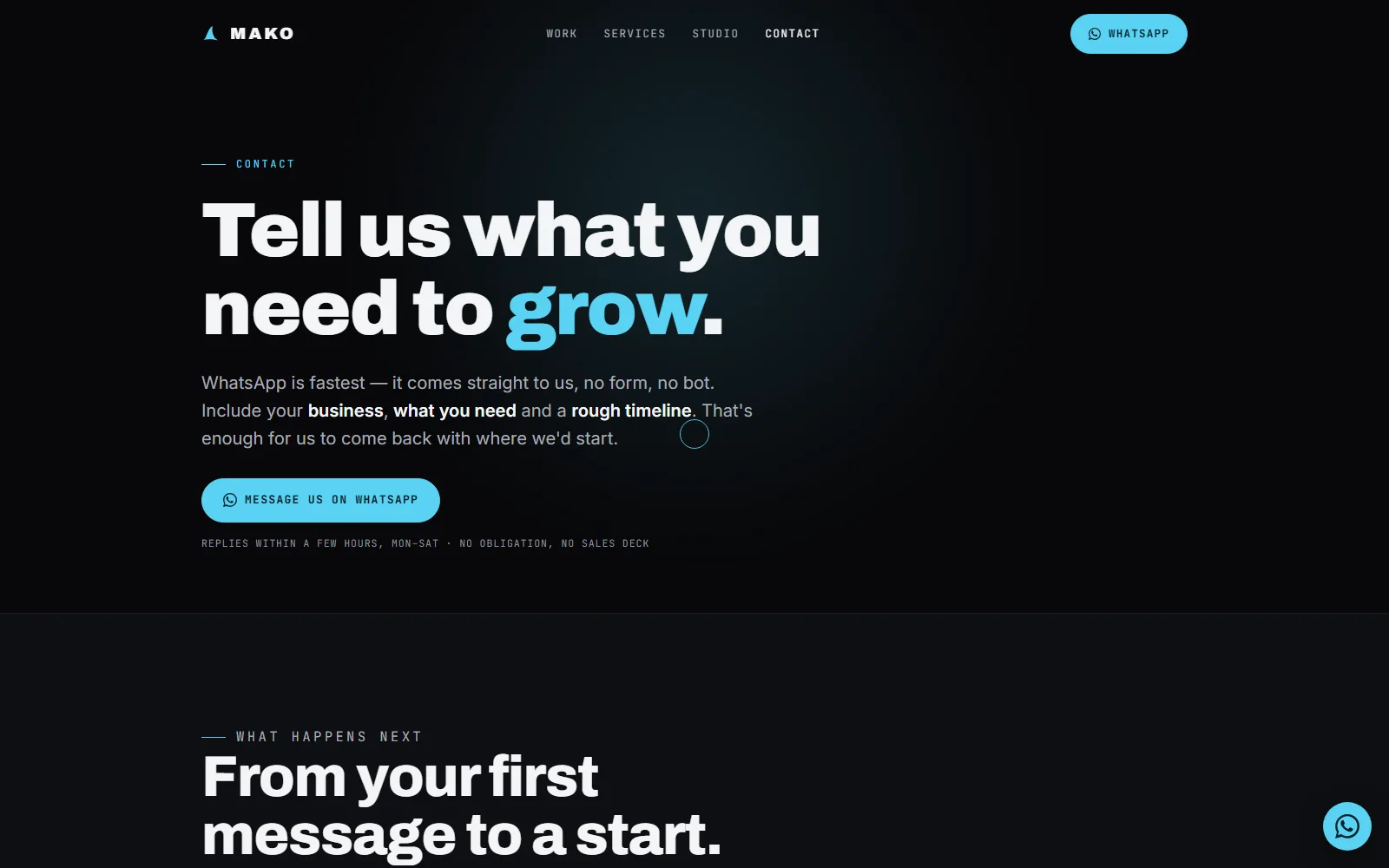
Fixed website pricing on the page, marketing scoped on a call, and a case-study section built from a client's real Instagram and Meta Ads exports rather than agency-speak. Every CTA is one WhatsApp link, prefilled, no form and no bot in the loop.
Who it is for
Businesses looking for one team that builds the website and runs the marketing.
What it does, feature by feature
- Five pages, one bundle. Home, work, services, studio and contact share one set of styles and scripts, hand-built with no framework.
- Prices on the page. Website packages carry fixed prices instead of a quote form. Marketing is scoped on a call.
- Real receipts. Case studies built from a client's actual Instagram and Meta Ads exports, not agency claims.
- WhatsApp-first contact. Every call to action opens WhatsApp with a starter message already typed.
- Safe launch. Built and checked on a password-protected preview copy before it replaced the live domain.
- Production basics. Forced HTTPS, redirects, security headers, caching, a real 404 page, and privacy and terms pages written for the studio's actual setup.
Why it is built this way
Built as a plain multi-page static site - one shared CSS/JS bundle across home, work, services, studio and contact, no framework, matching the studio's own zero-marginal-cost philosophy. Services carry fixed prices printed on the page instead of "get a quote," and every call-to-action is a WhatsApp deep link prefilled with a "My business:" starter message, because the studio's whole pitch is no account managers and no handoffs. Deployed to a password-protected staging copy first, checked there, then promoted to the live root once it held up - so the real client-facing domain never showed a half-finished page.
What was hard
The studio's own case-study numbers did not exist as a clean dataset; they were scattered across a client's Instagram and Meta Ads exports in one portfolio zip. Mining that turned an "agency claims" page into one with attributable receipts: six reels for one client totalling roughly 12M views and 8.6M accounts reached, and four August-2026 Meta ad campaigns spending about ₹36.5k for 297 leads - one of them landing 53% under the Jaipur benchmark cost-per-lead. And going from a placeholder straight to a live public domain meant the boring infrastructure had to be right the first time: forced HTTPS and www redirects, a real 404 page, and Privacy/Terms pages rewritten for the studio's actual stack (no analytics, no form, Google Fonts disclosed) instead of template boilerplate.
Outcomes
- ~12M reel views cited
- 297 leads, ~₹36.5k spend
- Fixed prices, no quote form
Stack
Need something similar?
Tell me what your team does by hand today and what the finished system needs to do. I will tell you whether an automation, a custom tool, a portal or a website is the right shape.